
When Your Last Teeth Cause Your Biggest Problems
Wisdom teeth have a way of arriving late and causing trouble once they do: crowding teeth that spent years settling into place, and often triggering pain, swelling, or infection before you even realize what’s happening. For many patients, having them removed is one of the most important steps toward protecting a smile they’ve worked hard to maintain.
At Ambis Dental, Dr. Edward Ambis has provided wisdom teeth removal to Ithaca-area patients for over 40 years, whether the teeth are impacted, erupting at an angle, or already crowding neighboring teeth. Call 607-272-1874 to schedule a consultation. We welcome patients from Ithaca as well as Dryden, Trumansburg, and Lansing.
Why Ithaca Patients Choose Dr. Ambis for Wisdom Teeth Removal
Wisdom teeth removal tends to go smoother in experienced hands. With over 40 years of practice, Dr. Ambis has handled wisdom teeth at every stage, from erupting at an angle to fully impacted, backed by a DDS from SUNY Buffalo, ADA membership, and a fellowship at the Misch Implant Institute. Patients who feel anxious about the procedure can choose from nitrous oxide, oral sedation, or local anesthesia alone, and many describe the office itself as personable and caring.
What Are Wisdom Teeth, and When Do They Cause Problems?
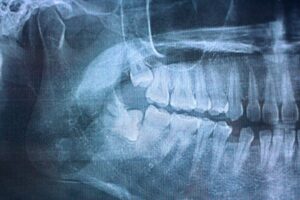 Wisdom teeth are the third set of molars, positioned at the very back of the mouth. They typically come in between the ages of 17 and 25. Most jaws simply don’t have room for them. When they can’t erupt properly, they become impacted—trapped beneath the gum line or emerging at an angle that pushes against nearby teeth. The results range from mild discomfort to infection, cyst formation, and damage to adjacent teeth.
Not every wisdom tooth needs to come out. Dr. Ambis evaluates each patient individually to assess the position and relationship of the wisdom teeth to surrounding structures. If they’re fully erupted, aligned, and causing no issues, monitoring may be all that’s needed.
Signs Your Wisdom Teeth May Need to Come Out
If any of the following problems sound familiar, don’t wait. Early evaluation keeps treatment simpler.
 Pain or pressure at the back of the mouth, especially near the jaw or ear
- Swelling, redness, or tenderness in the gums behind the second molars
- Difficulty opening your mouth fully or comfortably
- A bad taste or persistent bad breath from the back of the mouth
- Visible crowding or shifting of nearby teeth
- Repeated infections around a partially erupted wisdom tooth
Comfortable Wisdom Teeth Removal
Anxiety about the procedure is one of the most common reasons patients put off wisdom teeth removal. Dr. Ambis offers sedation dentistry, including nitrous oxide and oral sedation, so the procedure feels manageable rather than something to dread. We’ll go over which option fits your needs during your consultation.
What the Wisdom Tooth Removal Process Looks Like
Most patients have all four wisdom teeth removed in a single appointment: one procedure, one recovery period, one return to normal life.
- Consultation and Imaging: X-rays and an exam assess the position of the wisdom teeth and flag any complications.
- Sedation: Your chosen sedation option is administered before treatment begins.
- Local anesthesia: The treatment area is fully numbed for additional comfort.
- Tooth Extraction: Dr. Ambis gently loosens and removes the tooth; impacted teeth may require a small incision and sectioning for safe removal.
- Closure: The site is cleaned, with sutures placed if needed to support healing.
- Recovery Instructions: Before you leave, our team walks through detailed aftercare and answers your questions.
Recovery: What to Expect After Wisdom Tooth Extraction
Most patients feel well enough to return to work or school within two to three days, though full tissue healing takes one to two weeks. Our team is available throughout your recovery and will schedule a follow-up to confirm the sites are healing properly.
 Stick to soft foods for the first several days—yogurt, mashed potatoes, smoothies, scrambled eggs, and cooled soup are good choices
- Apply ice packs to the outside of the face in 20-minute intervals during the first 24–48 hours to manage swelling
- Rest and limit activity for the first day or two, since exertion can increase bleeding and slow healing
- Take pain medication as recommended to stay ahead of discomfort
- Avoid straws, smoking, and forceful spitting for at least 72 hours, since these can dislodge the healing blood clot and lead to dry socket
- Keep the area clean with a gentle warm salt water rinse after the first 24 hours, avoiding direct brushing of the extraction sites