
A Missing Crown or Filling Is More Urgent Than It Feels
 It is easy to assume a lost crown or filling is a minor inconvenience, especially when it does not hurt right away. But that restoration was covering the tooth for a reason, and once it is exposed, the tooth becomes vulnerable to sensitivity, new decay, and sometimes a crack that turns a simple repair into a much bigger procedure.
At the Edward J. Ambis Center for Dental Medicine in Ithaca, NY, Dr. Edward Ambis treats a lost crown or filling as a same-day priority, since the longer that tooth sits unprotected, the more likely it is to get worse. Patients throughout Ithaca, Lansing, Dryden, and Trumansburg know to call right away when this happens.
If a crown or filling has come loose or fallen out, call 607-272-1874. Dr. Ambis will get you scheduled quickly and walk you through protecting the tooth in the meantime.
Convenient, Experienced Care in Downtown Ithaca
Dr. Edward Ambis, DDS, DICOI, has spent more than 40 years restoring teeth throughout the Ithaca community, which means he has seen just about every way a crown or filling can fail. The office sits on West Buffalo Street in downtown Ithaca, close to pharmacies where you can pick up temporary dental cement if you need it before your appointment.
In a review posted to the practice’s patient testimonials page, reviewer Margaret D. described a surgical procedure with Dr. Ambis as going smoothly, crediting his knowledge and skill and saying she was glad she found the practice. For restorative work like a new crown or filling, that same level of skill applies directly to getting the tooth properly repaired.
Why Crowns and Fillings Come Loose
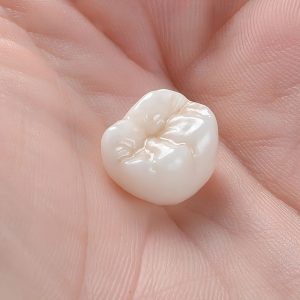 A lost crown or filling occurs when the restoration that once covered and protected a tooth separates from it, either falling out entirely or coming loose enough to expose the tooth structure underneath. The tooth loses the protective barrier it needs against bacteria, temperature changes, and everyday biting pressure. Left unaddressed, what starts as a cosmetic or minor sensitivity issue can develop into pain, infection, or a fracture within a matter of weeks.
Understanding the cause helps Dr. Ambis figure out the right long-term fix, not just a quick replacement:
- Decay underneath the restoration. Bacteria can work their way under the edge of an old filling or crown over time, weakening the bond and eventually the tooth structure holding it in place.
- Wear and age. Fillings and crowns do not last forever. Most fillings last 10 to 15 years and crowns 10 to 20, depending on material and bite forces.
- Grinding or clenching. Constant pressure from nighttime grinding can loosen even a well-placed restoration.
- A sticky or hard food. Caramel, ice, or hard candy is a common culprit for pulling a crown or filling loose in an instant.
- Trauma. A blow to the face or a fall can dislodge a restoration even if the tooth itself looks fine.
What to Do As Soon As the Crown or Filling Falls Out
Knowing what to do during a dental emergency can help keep you calm and avoid needing more expensive treatment.
- Find the crown or filling if you can, and keep it. Do not throw it away, since it can often be recemented if it is intact.
- Keep the tooth clean. Gently rinse with warm water to remove any food debris from the exposed area.
- Protect the tooth with temporary dental cement, available at most pharmacies, if you cannot get in right away. This is not a permanent fix, but it shields the tooth from temperature and pressure in the short term. Never use super glue or household adhesives. They are not safe for use in the mouth and can damage the tooth further.
- Avoid chewing on that side. Stick to the opposite side of your mouth until Dr. Ambis can see you.
- Manage sensitivity with an over-the-counter pain reliever if the exposed tooth is uncomfortable with hot, cold, or sweet foods.
- Call 607-272-1874 as soon as possible. The sooner the tooth is covered again, the lower the risk of decay, fracture, or nerve involvement.
How Dr. Ambis Repairs a Lost Crown or Filling
Treatment depends on the condition of both the restoration and the tooth underneath:
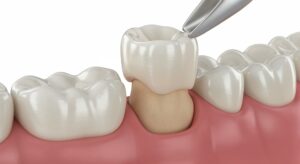 Recementing: If the crown is intact and the tooth structure underneath is healthy, Dr. Ambis can often clean it and recement it back into place in a single visit.
- New Filling: If a filling has fallen out, Dr. Ambis removes any remaining decay, evaluates the tooth structure, and places a fresh, tooth-colored composite filling.
- New Crown: If the original crown is cracked, worn out, or does not fit correctly anymore, or if decay has spread underneath it, a new custom crown will need to be made. You may leave with a temporary crown while the permanent one is fabricated.
- Deeper Treatment: Occasionally, what looks like a simple lost filling reveals decay that has reached the nerve. In that case, Dr. Ambis will discuss whether a root canal is needed before the tooth can be properly restored.
What Recovery Looks Like
In almost every case, treating the tooth sooner rather than later leads to a more conservative and less expensive repair.
- Recemented crowns typically involve zero downtime. You may have mild sensitivity for a day or two as the tooth readjusts.
- New fillings allow you to return to normal eating almost immediately, though composite fillings need a short period before biting hard on that side.
- New crowns require two visits in most cases, an initial appointment for preparation and a temporary crown, followed by a second visit two to three weeks later to place the permanent one. Avoid sticky or hard foods on the temporary crown, since it is not as strong as the final restoration.
- If a root canal was needed, expect a few days of mild soreness, manageable with over-the-counter pain relief, before the permanent crown is placed.
Prevention Specific to Lost Restorations
Good hygiene helps, but caring for a dental crown or maintaining a dental filling comes down to a few specific habits:
- Avoid chewing ice, hard candy, and popcorn kernels, all common culprits for cracking or dislodging a restoration.
- Wear a nightguard if you grind your teeth. This is one of the leading causes of crowns and fillings loosening prematurely, and most people do not realize they grind until Dr. Ambis points out the wear pattern.
- Do not use your teeth as tools. Opening packages or bottles with your teeth puts direct, unpredictable pressure on restorations that they are not designed to handle.
- Keep up with routine checkups, since Dr. Ambis can often spot a filling or crown starting to wear down or lift at the edge before it fails.
- Bring older restorations in for evaluation. If you know a filling or crown is approaching or past its expected lifespan, a proactive replacement is far less disruptive than an emergency one.