
Titanium or Zirconia? What to Know About Dental Implant Materials
Which Dental Implant Material is Best?
Most patients researching tooth replacement focus on the outcome: a stable, natural-looking tooth that lets them eat and smile with confidence. Fewer stop to ask what the restoration itself is actually made of. It’s a reasonable question, and one that comes up more often as patients do their own research before a consultation.
Dental implant materials fall into two main categories: titanium and zirconia. Both are biocompatible, both are FDA-approved, and both are considered safe, long-term options. The difference comes down to composition, structure, and which one makes sense for a given patient’s health history and preferences.
At Ambis Dental, our Ithaca dentist discusses implant material options as part of every implant consultation. Call 607-272-1874 to schedule yours.
Titanium Dental Implants
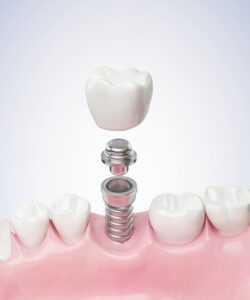 Titanium has been used in dental implants for decades, and it remains the most common material for good reason. It’s strong, lightweight, and has a long track record of successful bone integration. Over 50 years of titanium implant research and long-term outcome data point to high success rates of over 90%.
Titanium implants are also built in two separate pieces: the implant post itself, which goes into the bone, and the abutment, which connects the post to the visible crown. This two-piece design gives the dentist more flexibility during treatment planning. The abutment can be selected, adjusted, or replaced somewhat independently of the implant post, which is useful in cases involving angled placement, custom crown shaping, or multi-step restorations.
Zirconia Dental Implants
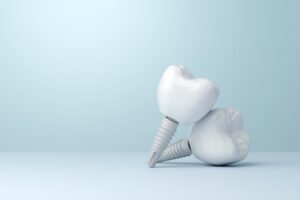 Zirconia is a crystal-based ceramic material, often associated with its resemblance to diamond in appearance. Like titanium, it’s biocompatible and capable of osseointegrating with the jawbone. Zirconia has been used in dentistry since the mid-1990s, though zirconia implants specifically are a newer development, with the bulk of clinical research published over the past 15 to 20 years. Zirconia implant studies show success rates comparable to titanium over the short and medium term, though the long-term data set is still smaller than titanium’s.
The main structural difference is that zirconia implants are made from a single piece, combining what would otherwise be the implant post and the abutment into one solid unit. There’s no seam between the two components. Because zirconia implants are one piece, there’s less flexibility to adjust the abutment portion independently once the implant is placed. That’s a tradeoff some patients are comfortable with in exchange for a fully metal-free restoration.
So Which One Is Right for You?
Neither material is universally “better.” The right choice depends on a combination of factors Dr. Ambis reviews during a consultation, including bone density and location, the number and position of teeth being replaced, esthetic goals, and personal preference regarding metal.
Metal Sensitivities
Can you be allergic to titanium dental implants?
True titanium allergies are considered rare. Dental implants are typically made from commercially pure titanium or a titanium alloy, both of which are highly biocompatible and well-tolerated by the vast majority of patients. Patients with a known metal sensitivity or a history of reactions to metal jewelry or medical hardware should mention this during their consultation so it can be factored into the material discussion.
Is zirconia a good option for patients with metal sensitivities?
Yes. Zirconia contains no metal, which makes it a common recommendation for patients who have a documented metal allergy or who simply prefer to avoid metal in their body for personal reasons.
It’s worth noting that the visible crown attached to a titanium implant can also be made from a metal-free material like zirconia or all-ceramic. That affects appearance, not what’s beneath the gumline: the implant post itself is still titanium. Patients with a genuine metal allergy who want a fully metal-free result, post included, should discuss zirconia implants specifically.
 Patients With Periodontal Disease
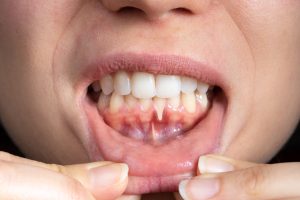
Advanced gum disease can cause gum recession and tooth loss. While any infection would need to be treated before receiving dental implants, thin gum tissue around the implant site is worth noting. The metal of titanium implants can sometimes show a gray shadow through the gums. The white color of zirconia implants is less likely to be seen.
Insurance Coverage of Implant Materials
Coverage varies by plan and by the clinical reason for choosing a particular material. This is a good question to bring to your consultation, where Dr. Ambis’s office can help you understand what your specific plan covers.
Talk Through Your Dental Implant Options With Dr. Ambis
Choosing a dental implant material isn’t something patients need to figure out alone. During a comprehensive consultation, Dr. Ambis reviews your oral health, discusses your goals, and walks you through which material fits your situation: titanium, zirconia, or a combination approach, depending on the restoration.
If you’re missing one or more teeth and want to understand your dental restoration options in Ithaca, call Ambis Dental at 607-272-1874. We proudly serve patients throughout Ithaca, Cayuga Heights, Lansing, Dryden, and Trumansburg.