
Every Minute Matters When a Tooth Comes Out
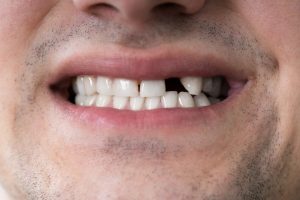 A knocked-out tooth is a dental emergency that does not give you time to think. One moment you are on the field, in the car, or simply walking down the stairs, and the next you are holding a tooth in your hand and wondering what to do next.
At the Edward J. Ambis Center for Dental Medicine in Ithaca, NY, Dr. Edward Ambis and his team treat these situations as true emergencies, because the speed of your response has more to do with saving that tooth than almost anything else. Patients from Ithaca, Lansing, Dryden, and Trumansburg call the office the moment this happens, and that quick call is often what makes the difference.
If a tooth has been knocked out, do not wait to see if the pain fades. Call 607-272-1874 now. Dr. Ambis will walk you through what to do on the phone while you head to the Ithaca dental office.
Why Patients Trust Dr. Ambis With Dental Emergencies
Dr. Edward Ambis, DDS, DICOI, brings more than 40 years of clinical experience to every emergency that walks through the door, and that depth of experience matters most in situations like this one, where fast, confident decision-making protects your tooth. A graduate of the SUNY Buffalo School of Dentistry, he also holds a master’s degree in Speech Pathology and Audiology. His office sits on West Buffalo Street in downtown Ithaca, home to Cornell University and Ithaca College, and close to local pharmacies where you can pick up temporary supplies on your way in.
In a review posted to the practice’s patient testimonials page, reviewer L. Dowd described being seen on very short notice, having a tooth treated without pain, and being talked through the best treatment options available. That kind of speed and clear communication is exactly what a knocked-out tooth situation calls for.
What Happens When a Tooth Is Avulsed
A knocked-out, or avulsed tooth has been completely separated from its socket, usually from a sports collision, a car accident, a fall, or a punch. The ligament fibers that anchor the tooth to the bone tear, and the tooth comes free, sometimes intact and sometimes with a small fragment still attached. The root surface of that tooth is covered in living cells, and those cells are what make reimplantation possible. Keeping those cells alive between the moment of injury and the moment Dr. Ambis can reseat the tooth is the entire goal of first aid.
 Common Causes of a Knocked-Out Tooth
- Sports collisions, particularly in football, hockey, basketball, and soccer
- Falls, whether on stairs, ice, or an uneven sidewalk
- Car accidents, where the face makes sudden contact with a hard surface
- Physical altercations involving a direct blow to the mouth
- Biting down on something unexpectedly hard, like ice or a piece of bone
What to Do When Your Tooth is Knocked Out
The steps you take immediately after the injury matter enormously, and they are worth knowing before you ever need them.
- Pick the tooth up by the crown. The crown is the white, visible part you normally see when you smile. Never touch or scrub the root, since that is where the delicate ligament cells live.
- Rinse only if visibly dirty, and only with clean water or milk for a few seconds. Do not scrub it, and do not use soap or disinfectant.
- Try to place it back in the socket facing the correct direction. If it slides in, bite down gently on a clean cloth or gauze to hold it in place until you reach the office.
- If it will not go back in, keep it moist. Milk is the best option because its pH and osmotic balance protect the root cells. If milk is not available, tuck the tooth between your cheek and gum, being careful not to swallow it. A tooth preservation kit, if you happen to have one, also works. Never store the tooth dry, and never store it in tap water, since water causes the root cells to swell and rupture.
- Get to the office within 30 to 60 minutes if at all possible. Call 607-272-1874 on your way so the team is prepared before you walk in.
How Dr. Ambis Treats a Knocked-Out Tooth
When you arrive, treatment moves quickly:
- Evaluation and X-rays: Dr. Ambis checks the socket and surrounding bone for fractures and confirms there is no debris lodged in the socket before reimplantation.
- Gentle Teeth Cleaning: The tooth and socket are rinsed to remove contamination without disturbing the root surface.
- Reimplantation: If the tooth is a viable candidate, it is repositioned into the socket.
- Splinting: A flexible splint bonds the tooth to the neighboring teeth to hold it steady while the ligament reattaches. This typically stays in place for two to four weeks.
- Root Canal Timing: Because the nerve supply is usually severed during avulsion, most reimplanted adult teeth need a root canal about one to two weeks after reimplantation, once the splint is stable, to prevent internal infection and support long-term retention.
If too much time has passed, or the tooth was fractured beyond repair, Dr. Ambis will discuss replacement options. A dental implant or a bridge, so the space does not affect your bite or your other teeth over time.
What Recovery Actually Looks Like After a Tooth is Knocked Out
Reimplantation is not the finish line, but it starts a healing process that Dr. Ambis monitors closely:
- The first few days may bring mild soreness and sensitivity to biting pressure. Over-the-counter pain relievers and a soft-food diet are usually enough.
- The splint stays on for two to four weeks while the periodontal ligament reattaches the tooth to the bone. Avoid chewing directly on that tooth during this period.
- Follow-up X-rays are taken over the following months to watch for root resorption, a process where the body begins to break down the root, which is the main long-term risk after an avulsion injury.
- A reimplanted tooth can last for years, though it is not uncommon for it to eventually require additional treatment down the road. Dr. Ambis will lay out realistic expectations based on how the tooth responds in those first few months.
- Return to sports or contact activity only after Dr. Ambis confirms the tooth is stable, usually once the splint is removed and healing is progressing normally.
Prevention Specific to Tooth Avulsion
General oral hygiene will not stop a tooth from being knocked out. This kind of injury is almost always about impact protection rather than decay prevention. A few things make the biggest difference:
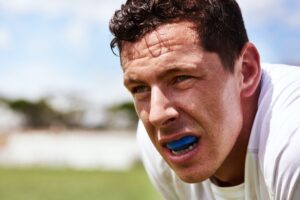 A custom-fitted mouthguard from Dr. Ambis offers far more protection than a boil-and-bite version from a sporting goods store, since it is molded to your exact bite and stays in place during impact.
- Wear the mouthguard for practice, not just games. Most avulsion injuries the team sees happen during practice, when players are less likely to have their guard in.
- Address a deep overbite or protruding front teeth early. Front teeth that sit further forward are more exposed to direct impact, and Dr. Ambis can flag this during a routine exam.
- Use a properly fitted helmet with a face cage or shield for sports like hockey, football, and lacrosse where facial contact is common.
- Never use your teeth to open packaging or hold objects, since a sudden slip can drive a tooth out of its socket.
If you are unsure whether your child’s mouthguard still fits properly, or whether your own bite puts your front teeth at extra risk, call 607-272-1874 and ask Dr. Ambis directly. A quick conversation now can prevent a much harder one later.