
What Dr. Ambis’s Master’s in Speech Pathology Means for Your Dental Care
What Does a Master’s Degree in Speech Pathology Have to Do With Your Teeth?
Most people don’t connect speech science with dental care. But the jaw, tongue, bite, and soft tissues of the mouth are shared territory between both fields. For patients of Dr. Edward Ambis at Ambis Dental in Ithaca, that overlap shapes treatment in ways that go well beyond a standard dental visit.
Dr. Ambis holds a DDS from SUNY Buffalo School of Dentistry and a master’s degree in Speech Pathology and Audiology. He’s also a fellow at the Resnik Implant Institute and a member of the American Dental Association, with over 40 years of service to the Ithaca community. That dual background isn’t coincidental. It reflects a clinical understanding of how dental function and communication are connected.
Call Ambis Dental at 607-272-1874 to schedule an appointment with a dentist near Lansing, Dryden, or Trumansburg.
 The Jaw Is Both a Dental and a Speech Organ
Your temporomandibular joint governs chewing, swallowing, and the formation of sounds. When it’s working well, you don’t think about it. When it isn’t, the effects reach further than most patients expect.
TMJ disorders can cause jaw pain, clicking, headaches, and limited jaw movement. Less discussed is how TMJ dysfunction can also change the way you speak. Restricted movement and muscle tension affect articulation, particularly sounds that require precise jaw and tongue positioning.
How Speech Pathology Training Changes TMJ Treatment
A dentist with speech pathology training evaluates the jaw as part of a larger functional system. That means understanding how jaw position relates to tongue posture, how muscle tension affects both chewing and phonation, and how an oral appliance needs to allow comfortable speech and swallowing, not just reposition the bite.
For patients near Cayuga Heights and Dryden dealing with chronic jaw pain, that perspective leads to more complete TMJ treatment planning. It’s not just about relieving pressure on the joint. It’s about restoring full function.
 Implants, Tooth Loss, and the Sounds You Make
Tooth loss changes how the tongue and lips contact the teeth to form sounds, especially fricatives like “s,” “f,” “v,” and “th.” Patients in Ithaca who’ve lost teeth may notice these changes long before they seek a solution.
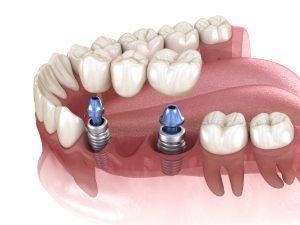
Dr. Ambis places dental implants with fellowship-level training from the Resnik Implant Institute. His speech pathology background adds a second layer of consideration: where the restoration sits affects tongue space and acoustic function, not just appearance. An implant design that accounts for speech outcomes produces results that feel natural from the first day.
Why Denture Wearers Near Ithaca Often Struggle With Speech
New denture wearers frequently notice that speech sounds different at first. “S” sounds may whistle, and certain words become harder to form clearly. Some of this is adjustment. Some of it reflects how well the dentures were designed.
The thickness of the palate, the position of the front teeth, and the way the prosthetic interacts with tongue movement during speech are all variables that affect articulation. A clinician who understands speech anatomy can anticipate these effects at the design stage, rather than troubleshooting them after delivery.
 Children’s Dentistry and Early Speech Patterns
Parents near Lansing and Trumansburg sometimes notice that dental development and speech seem connected. They’re right. Tongue thrust, mouth breathing, and early tooth loss can all affect how children develop certain sounds.
Dr. Ambis’s formal speech pathology training enables him to recognize these intersections during routine pediatric dental exams. When a dental finding has implications for a child’s speech development, that knowledge is already in the room.
What to Expect After Oral Surgery in Ithaca
Recovery from extractions, implant placement, or gum disease treatment can temporarily change how speaking feels. Swelling, residual numbness, and soft tissue changes all play a role. Knowing what’s normal and what warrants a follow-up call is something a provider with speech pathology training can address directly.
Patients near Ithaca don’t need to wonder whether a post-procedure speech change is expected. It’s a question their dentist is prepared to answer with clinical precision.
Ithaca Dentistry That Accounts for the Whole Mouth
Most people come to the dentist to address a specific problem: a cavity, a missing tooth, or a painful jaw. What distinguishes care at Ambis Dental in Ithaca isn’t just the technical expertise behind each treatment. It’s that Dr. Ambis understands the mouth as an integrated system, one in which dental health, jaw function, and communication overlap.
For patients in Ithaca, Lansing, Dryden, Trumansburg, and the surrounding communities, that perspective is available at a single practice with over four decades of history in this community.
Call Ambis Dental at 607-272-1874 to schedule your appointment and experience dental care in Ithaca that accounts for how everything in your mouth works together.